
Surgical technique
Minimally Invasive
Hip & Knee Replacement
Less disruption at surgery.
Faster recovery after.
Quad-sparing and tourniquetless techniques for the knee. Muscle-sparing anterior approach for the hip. Dr. Fox selects approaches that preserve what matters most — so your recovery starts from a better place.
"The goal of joint replacement is not just a well-placed implant — it is a patient who recovers quickly, regains function fully, and returns to the life they want."
— Dr. Yitzak Fox
Knee replacement
Quad-Sparing Midvastus & Tourniquetless Technique
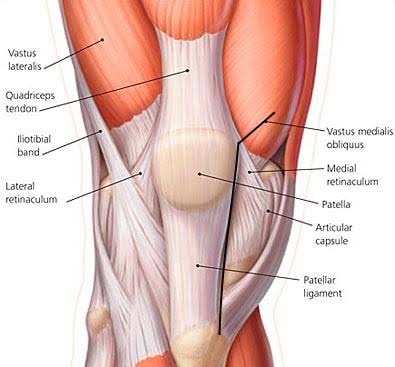
Standard knee replacement uses a medial parapatellar approach that cuts through the quadriceps tendon. The midvastus approach splits the vastus medialis oblique along its natural fiber direction — preserving the muscle's continuity and protecting the extensor mechanism that powers early recovery.
What makes it different
Midvastus approach
Rather than cutting through the quadriceps tendon, the incision follows the natural fiber direction of the vastus medialis oblique — the muscle is split, not severed. The extensor mechanism remains intact from the moment surgery ends.
No tourniquet
A tourniquet inflated around the thigh cuts off blood flow to the leg during surgery. This ischemia damages muscle fibers and triggers a reactive inflammatory response that drives post-operative pain and swelling. Dr. Fox performs knee replacement without a tourniquet, using tranexamic acid to manage bleeding instead.
Combined effect
Together, these techniques are designed to minimize muscle disruption and ischemic injury that may contribute to early postoperative pain and delayed quadriceps recovery. The implant itself is identical to standard technique; the published evidence suggests the recovery trajectory may differ.
What patients experience
Extensor mechanism preserved
The midvastus approach splits the vastus medialis oblique along its fiber direction rather than transecting it — the quadriceps tendon remains intact from the moment surgery ends.
Reduced ischemic injury
Avoiding tourniquet inflation eliminates the period of limb ischemia that can contribute to muscle damage and early postoperative swelling. Tranexamic acid is used to manage bleeding.
Earlier straight-leg raise in published studies
Randomized trials report earlier return of active quad control with quad-sparing approaches — a key milestone for physical therapy progression.
Earlier stair climbing in published studies
Studies report earlier stair negotiation with midvastus technique compared to standard medial parapatellar approach. Individual recovery timelines vary.
Equivalent long-term implant survival
Published data show no compromise in long-term implant survivorship with quad-sparing approaches — the potential benefit is in early recovery, not at the cost of durability.
Compatible with same-day discharge
Earlier functional milestones support outpatient or same-day discharge pathways when medically appropriate for the individual patient.
The evidence
These techniques are not experimental. The following peer-reviewed studies support their use in routine primary knee replacement.
Engh & Holt, J Arthroplasty 2003
Midvastus approach was associated with preserved quadriceps strength at 6 weeks vs. standard medial parapatellar — patients in the midvastus group climbed stairs approximately 2 weeks earlier.
PubMed 12934209Bourke et al., J Bone Joint Surg Br 2010
Randomized trial: midvastus patients demonstrated significantly better early quadriceps recovery and shorter hospital stay, with equivalent 5-year functional outcomes.
PubMed 20436000Karachalios et al., J Arthroplasty 2009
Quad-sparing approaches were associated with lower post-op pain scores at 24 and 48 hours and decreased morphine consumption in the first 48 hours.
PubMed 18534396Tai et al., Knee Surg Sports Traumatol Arthrosc 2014
Tourniquetless TKA was associated with reduced post-operative pain, swelling, and analgesic use without a significant increase in operative blood loss when combined with tranexamic acid.
PubMed 23417202Ejaz et al., Acta Orthop 2014
Randomized controlled trial: tourniquet-free TKA was associated with significantly less post-op pain and faster return to straight-leg raise compared to tourniquet use.
PubMed 24286564Zhang et al., Medicine 2017 (meta-analysis)
Pooled analysis of 9 RCTs: tourniquetless TKA was associated with less post-operative pain, less swelling, and earlier functional recovery. Heterogeneity across studies was noted.
PubMed 28272224Hip replacement
Muscle-Sparing Anterior Approach
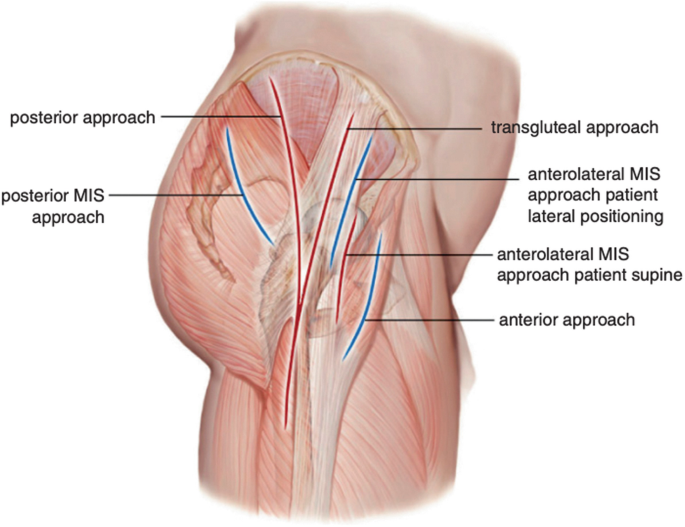
The posterior approach — the most common in hip replacement — requires detaching the short external rotator muscles from the femur to access the joint. The anterior approach works between existing muscle planes without detaching anything. The muscles are moved aside, the joint is replaced, and they return to their original position when the retractors are removed.
What makes it different
Internervous, intermuscular plane
The anterior approach uses the interval between the tensor fasciae latae and the sartorius — a natural anatomic plane with no major nerves or vessels crossing it. No muscles are cut or detached from bone.
No posterior precautions
Standard posterior hip precautions exist because detached muscles cannot resist dislocation until they heal. With the anterior approach, the posterior capsule and short rotators are not disturbed — precautions are not required as a result of the approach itself.
Intraoperative fluoroscopy
Dr. Fox uses real-time X-ray imaging during the procedure to confirm cup position, stem alignment, and leg length before the patient leaves the operating room — reducing the risk of malposition and leg-length discrepancy.
What patients experience
No posterior hip precautions
Because the posterior capsule and short external rotators are not disturbed, the standard posterior hip precautions are not required. This is a structural consequence of the approach, not a patient-specific outcome.
Lower early pain scores in published trials
Randomized trials report lower pain scores and reduced analgesic requirements in the first days after surgery with the anterior approach compared to posterior technique.
Earlier independent ambulation in published studies
Published comparative studies report earlier return to unassisted walking with the anterior approach. Individual recovery depends on patient factors, comorbidities, and rehabilitation.
Intraoperative fluoroscopy
Real-time imaging during the procedure allows Dr. Fox to confirm cup position, stem alignment, and leg length before the patient leaves the operating room.
Earlier return to driving in published studies
Studies report earlier return to driving with the anterior approach, in part because posterior precautions are not required. Clearance depends on individual recovery and clinical judgment.
Compatible with same-day discharge
The anterior approach is well-suited to outpatient surgery programs. Whether a patient is a candidate for same-day discharge depends on medical, social, and logistical factors.
The evidence
The anterior approach has been studied in randomized trials and systematic reviews. The studies below represent the published evidence Dr. Fox draws on when discussing this approach with patients.
Meneghini et al., J Arthroplasty 2011
Anterior approach THA patients had significantly less pain at 2 and 6 weeks, walked further at discharge, and required fewer days of inpatient rehabilitation in this prospective series.
PubMed 21071178Restrepo et al., Orthopedics 2010
Prospective comparison: anterior approach patients returned to unassisted ambulation approximately 4 days earlier and had lower narcotic requirements in the first week.
PubMed 20839699Taunton et al., Clin Orthop Relat Res 2014
Posterior hip precautions were not required with the anterior approach in this series — patients reported greater confidence with daily activities and earlier return to driving.
PubMed 24081667Christensen & Jacobs, J Bone Joint Surg Am 2015
Randomized trial: anterior approach THA demonstrated superior early functional outcomes at 2 and 6 weeks; outcomes were equivalent between groups at 1 year.
PubMed 26582620Higgins et al., J Arthroplasty 2015
Anterior approach was associated with lower dislocation rates compared to posterior approach without capsular repair in this retrospective series.
PubMed 25818029Zhao et al., J Orthop Surg Res 2017 (meta-analysis)
Systematic review of 14 studies: anterior approach THA was associated with shorter hospital stay, faster gait recovery, and lower early complication rates. Study quality varied.
PubMed 28222791
Not every patient is the same candidate
The anterior approach and midvastus technique are Dr. Fox's preferred approaches for the right patient — but anatomy, body habitus, prior surgery, and implant requirements all influence which approach is safest and most effective for a given individual.
Dr. Fox will discuss the planned approach and the reasoning behind it at your consultation. The goal is always the same: the best possible outcome for you, using the best available technique for your specific situation.
"What is preserved at surgery directly determines what is available for recovery."
— Dr. Yitzak Fox
Ready to discuss your options?
Schedule a consultation to learn which approach is right for your hip or knee.